
lARGE WILDLIFE Garden
Mid Suffolk
Construction completed December 2024
Landscaping contractors: Stewart Landscapes
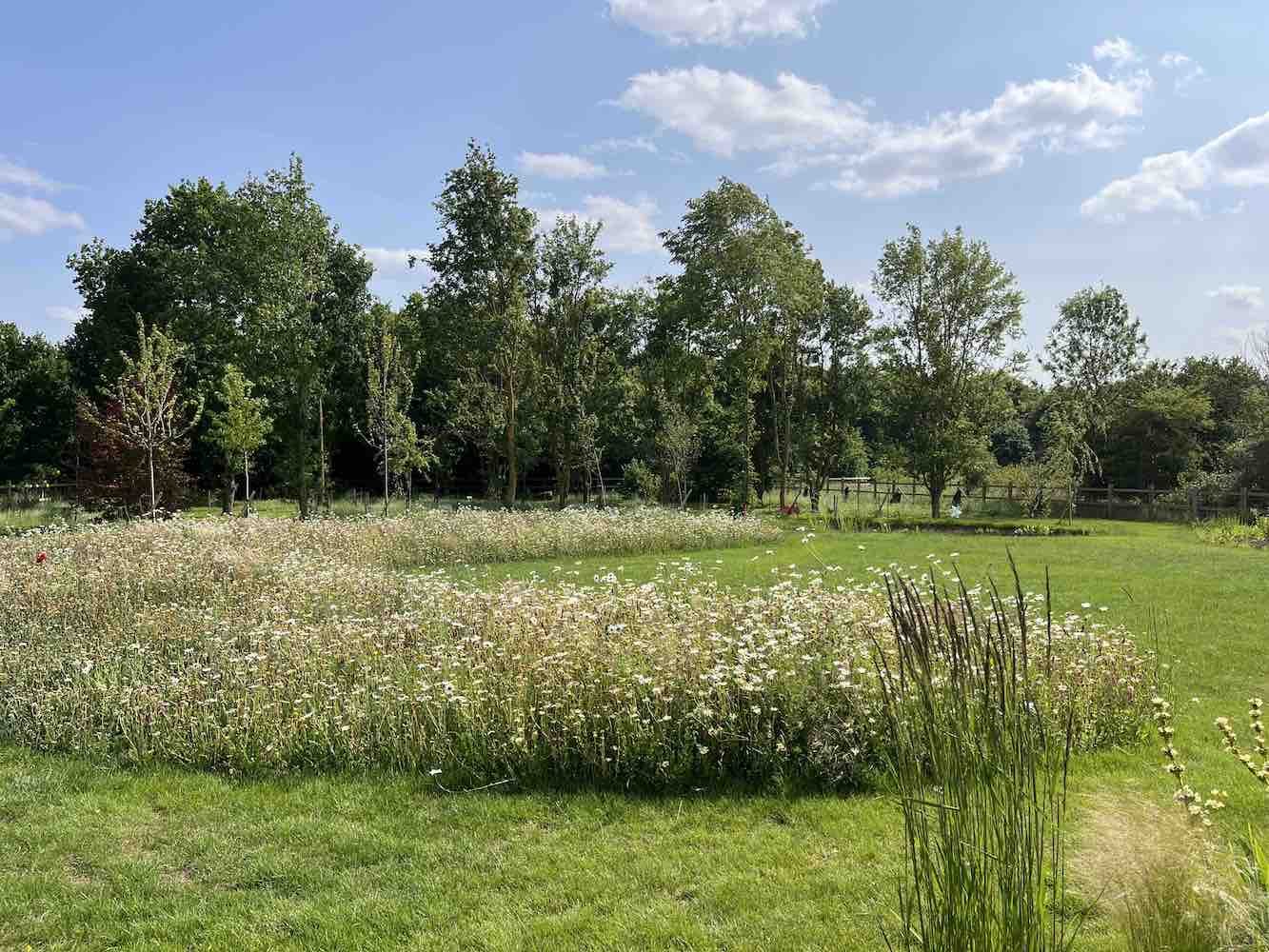
Overall this garden design aims to be sustainable and to support wildlife of many kinds into the future. Of course, making any completely new garden comes with disturbance during the construction phase. But we will work as carefully as possible, making the best conditions for quick, yet sustainable, regeneration of the site, using the following methods to achieve a sustainable design;
-
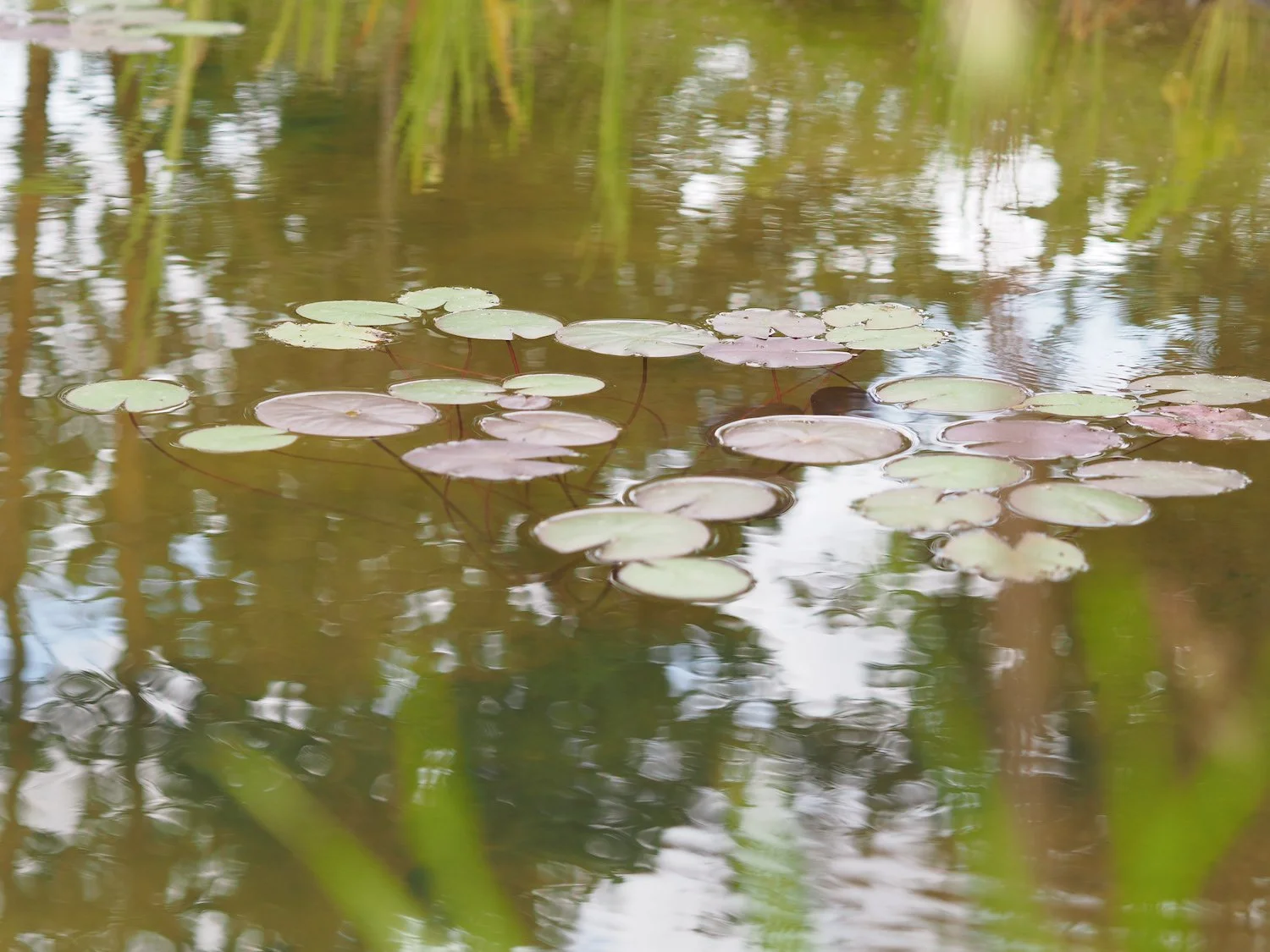
USING PUDDLED CLAY IN A NEW WILDLIFE POND
Compacted clay, with all the air pockets squeezed out, is called puddled clay. This creates a watertight layer – suitable for lining a pond.
-
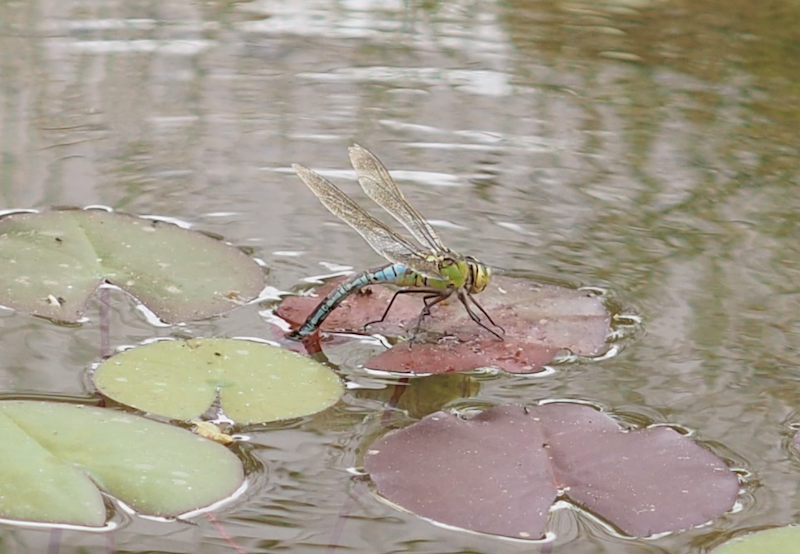
RAINWATER HARVESTING
From the roof of the house to refill the pond.
-
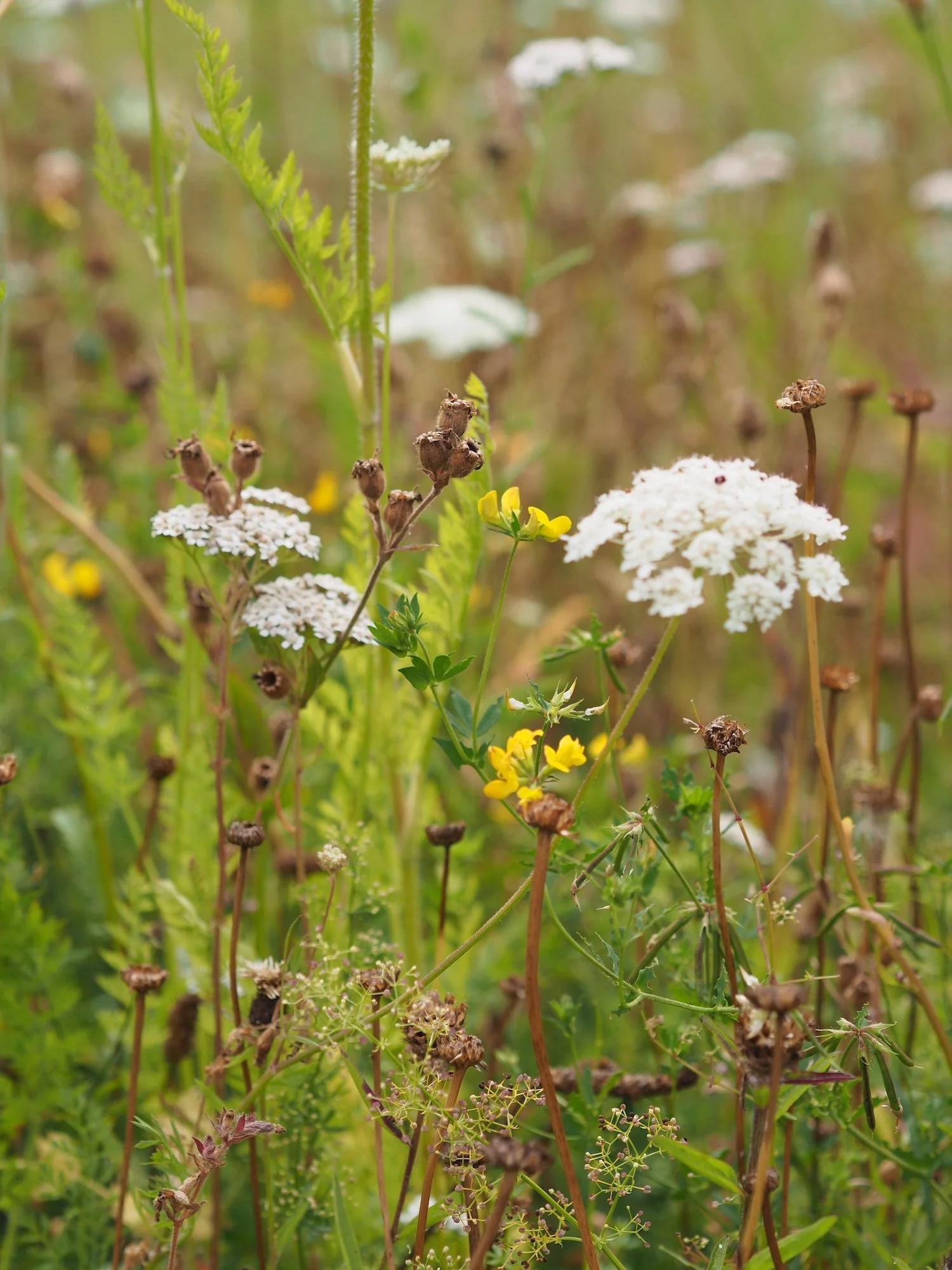
HABITAT CREATION
Adding a meadow area and developing a woodland garden for habitat creation as well as being low maintenance.
-
Prioritising composting
Before work started on anything else in the garden, we erected three composting bins within the shaded woodland area.
From a garden sustainability point of view this means less compost and mulch is brought into the site, because the client will be producing her own.

-
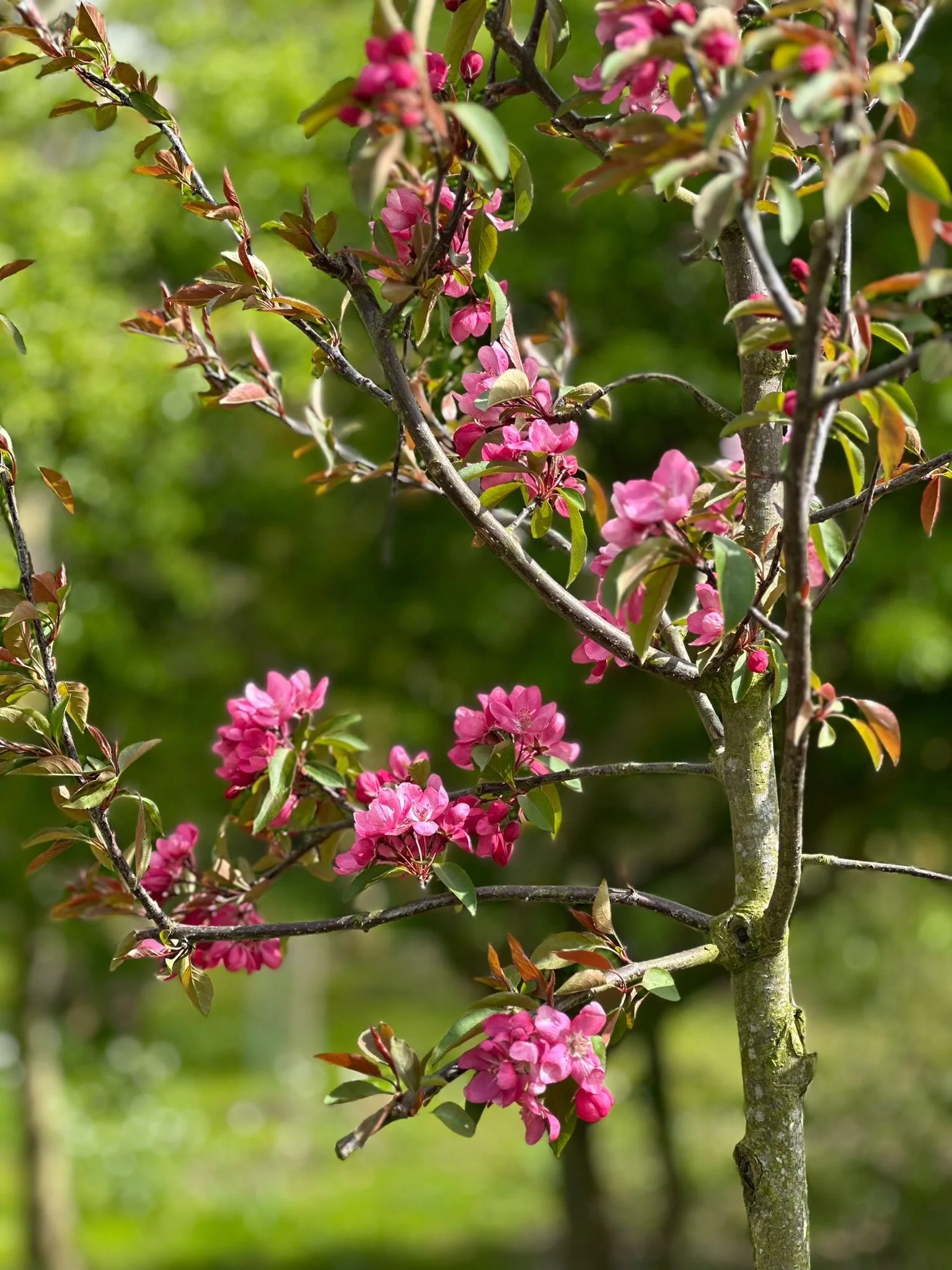
Selecting Garden Trees to Benefit Wildlife
Including native trees to support insect species and appropriate trees for waterlogged areas of the garden.
-
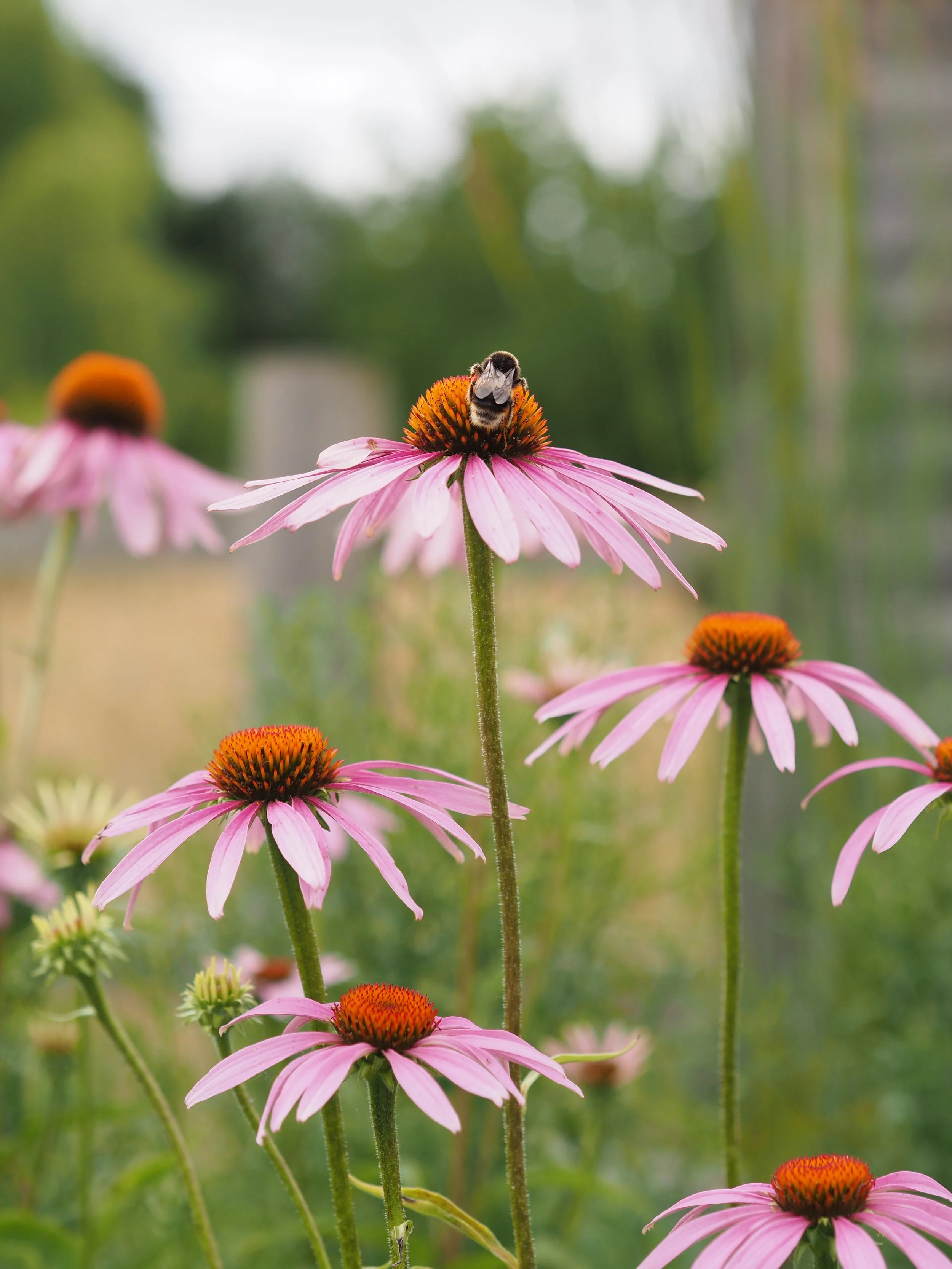
Creating garden borders for pollinators
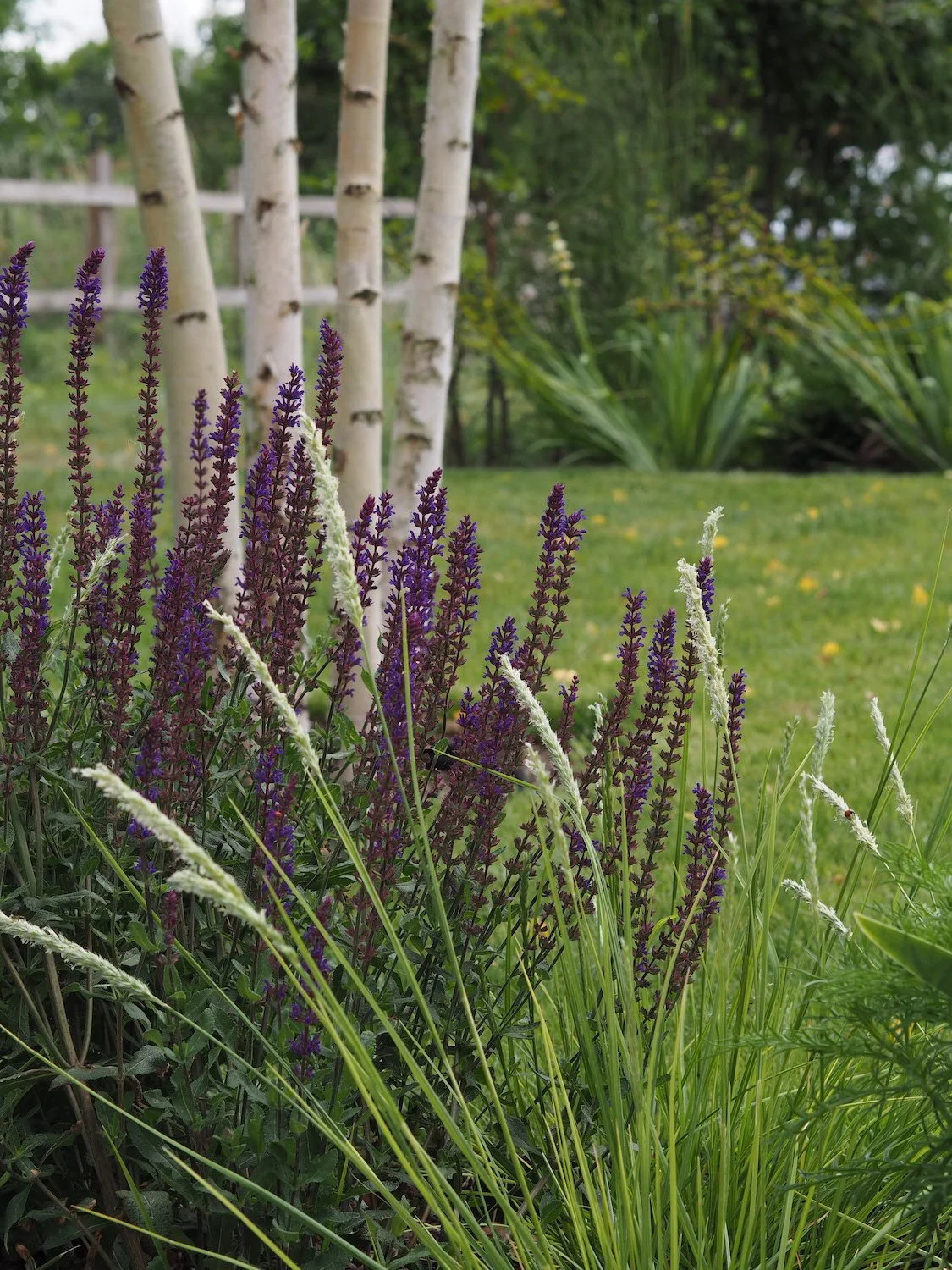
The borders will include a long season of flowering plants for pollinators. From January and February, bulbs such as snowdrops and aconites will begin an array of flowers that will continue through to late season flowers such as hylotelephiums (sedums) and Symphyotrichum ‘Little Carlow’ (aster).
-
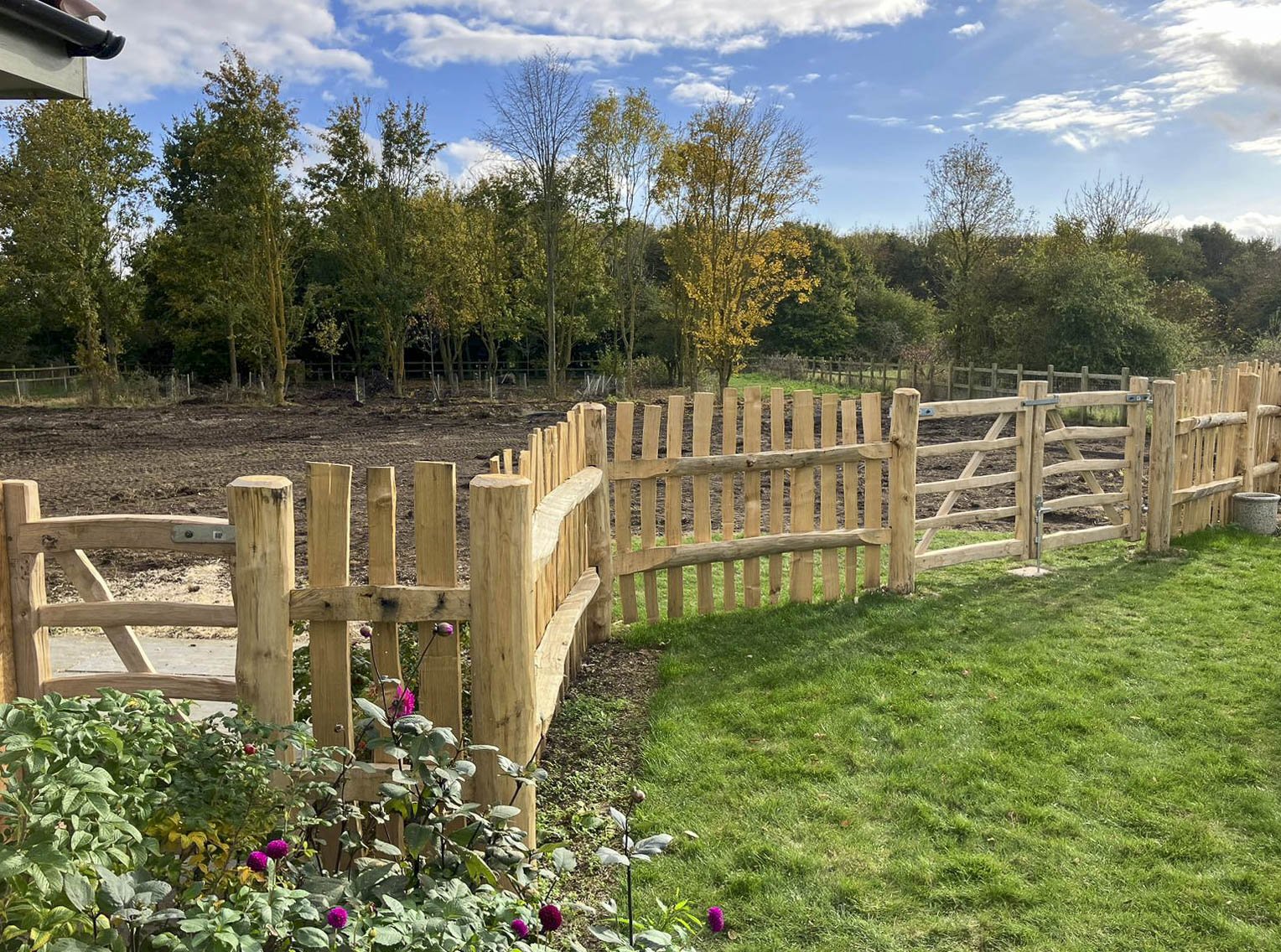
Traditional fencing handmade from local, sustainable timber
These are the work of Cambridge craftsman and coppice worker Olly Moses who uses traditional methods and very local, sustainably managed timber.
Olly used Suffolk chestnut, cut from Hawkins Forestry. Located near Bury St Edmunds – under 10 miles away from the garden – Hawkins Forestry manage, plant and maintain ancient coppice woodland. Their work is driven by conservation and sustainability principles.
Rather than using concrete, the fencing posts were installed using a rammed earth method.
-
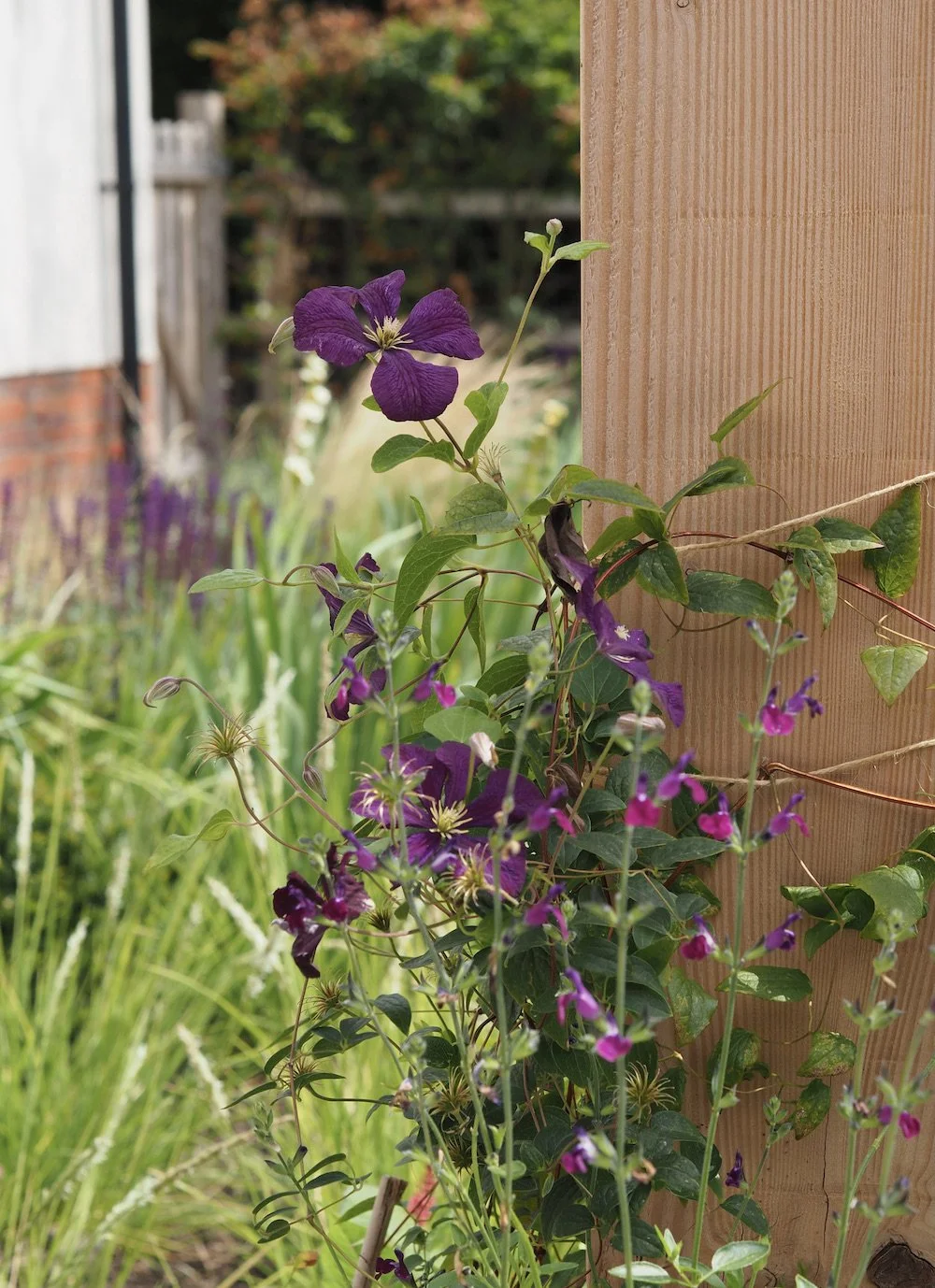
Working with the existing hard landscaping
Softening it with planting as well as structural additions that will support planting such as the pergola
One of the objectives of the design is to connect the house to the surrounding Suffolk landscape, making the most of the lovely view out to the west towards the weeping willow tree in the adjacent field. I have used organic curves in the design to draw your eye away from the house and towards the willow, pond and woodland beyond, the ‘S’ curve of a new planting bed is defined with steel edging. The curves continue across through the kidney shape of the pond and then back towards the house again with the curve of the wildflower turf.
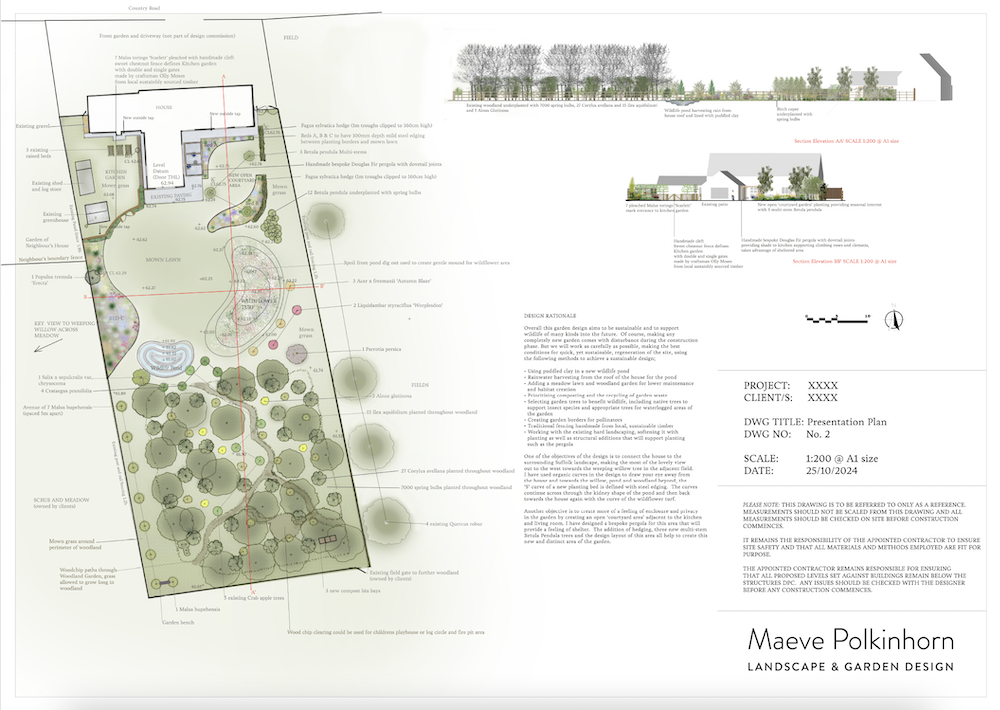
The full garden plan, with wildflower meadow-lawn and wildlife pond in the central area.
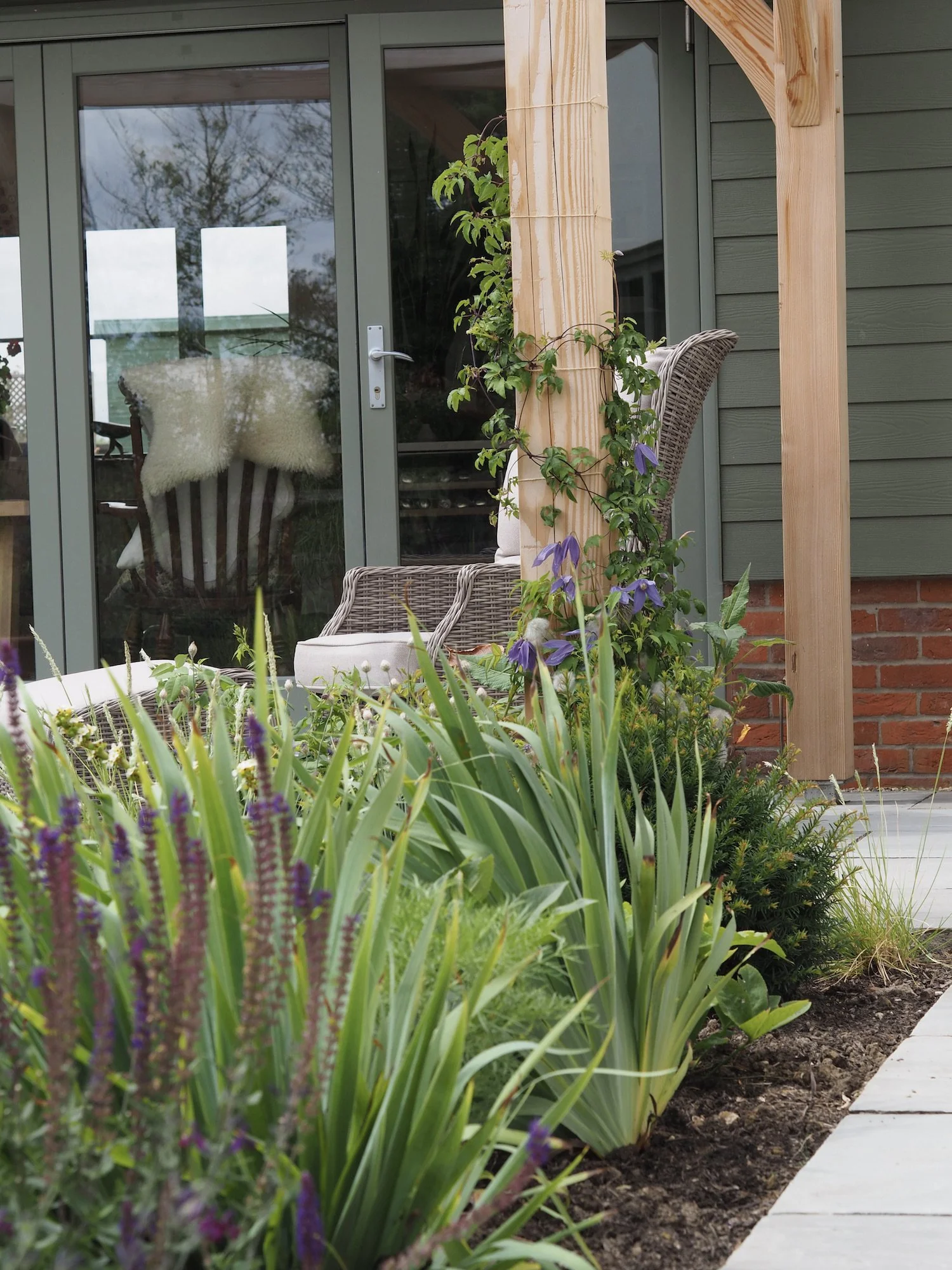
Another objective is to create more of a feeling of enclosure and privacy in the garden by creating an open ‘courtyard area’ adjacent to the kitchen and living room. I have designed a bespoke pergola for this area that will provide a feeling of shelter. The addition of hedging, three new multi-stem Betula Pendula trees and the design layout of this area all help to create this new and distinct area of the garden.

“This garden means such a lot to me. I will definitely be looking out for all the wildlife. You have certainly created a wonderful space/ garden/ landscape, which will give me so much enjoyment and fulfilment for my retirement. Thank you so much.”